
June 26, 2026
Unpacking Oregon’s
K-Shaped Economy
Largely absent from the robust discourse about Oregon’s economy is one key fact: A significant portion of the wealth generated in Oregon is going directly to out-of-state CEOs and shareholders. Left unchecked, this outflow of profits will continue to enrich the wealthy while working families shoulder rising costs and increased economic insecurity — further deepening the “K-shaped economy” already taking root in Oregon.
As policymakers tackle the state's economic challenges, we must not lose sight of this underlying structural issue: It’s not enough to keep growing the economy; we must ensure that more of that growth stays here and benefits all Oregonians.
Setting the Record Straight About Oregon’s Economy
Let’s be clear: While there’s work to do, Oregon’s economy is growing — as it has been for the past decade. Oregon’s per-capita GDP has risen significantly, from 39th nationally in 1997 to 26th in 2024. And gross operating surplus, the profits businesses make from their operations in Oregon, has grown steadily since 2000.
The issue isn't whether our economy is growing, it's how it's growing, and for whom. Some of Oregon’s fastest-growing industries — real estate, rental, and leasing; data processing, hosting, and information services — are highly capital-intensive, requiring large upfront investments but often little labor. Profits then flow largely to wealthy investors and out-of-state venture capitalists rather than hardworking Oregonians.
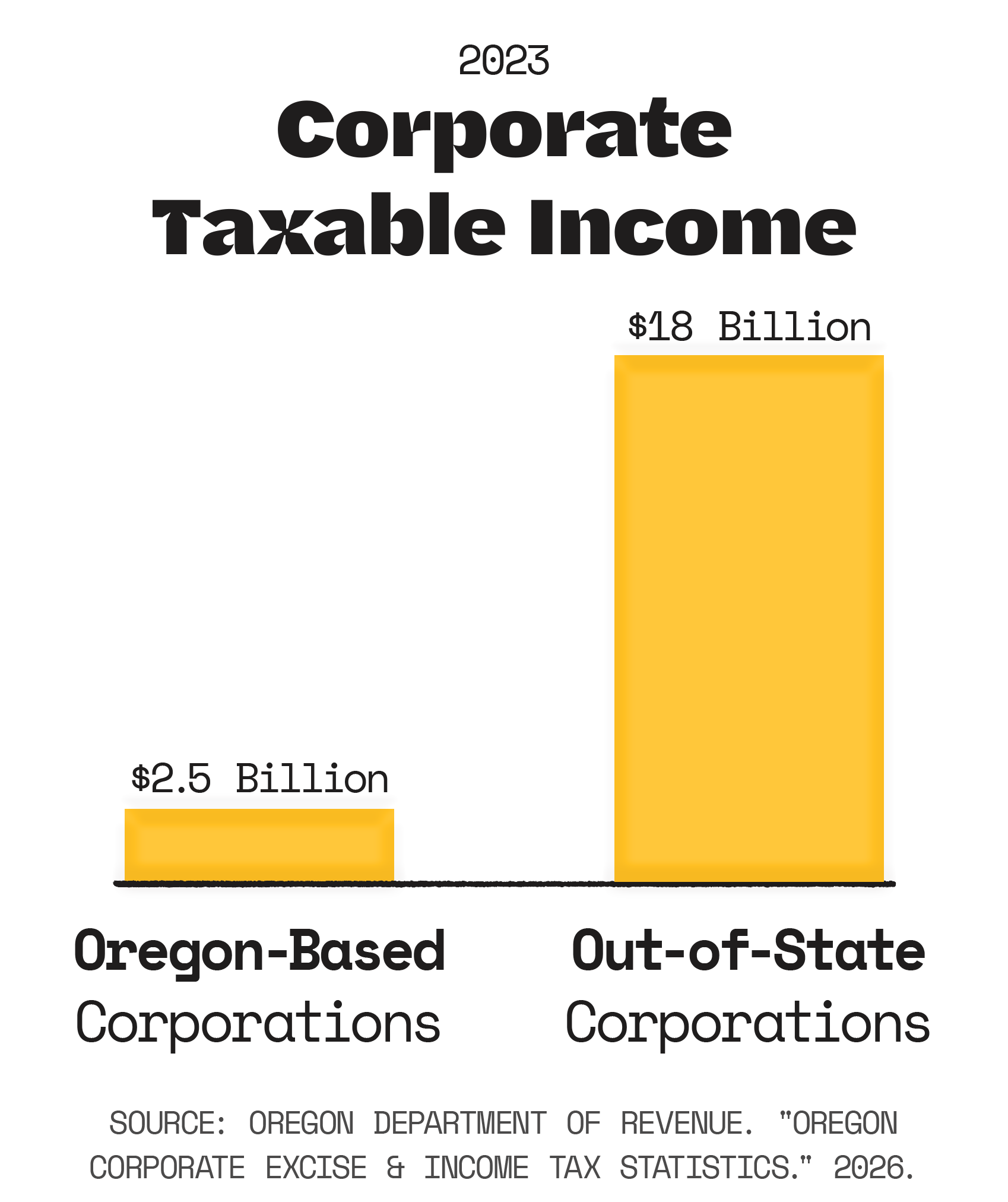
Corporate income tax data show how out-of-state companies’ share of the Oregon market is growing. In 2023, Oregon-based corporations reported $2.5 billion in taxable income subject to the state’s corporate income tax. Corporations based elsewhere reported $18 billion in taxable income.In 2001, corporations based in Oregon made 34% of the taxable income; by 2023, it was down to 12%.
What’s left behind in Oregon is a K-shaped economy, with the ultra-wealthy and big corporations doing exceptionally well while hardworking families and small businesses fall further behind.
Who’s Doing Well: The Wealthy
Just how well are the wealthy doing? In 2023, the top 1% of Oregon taxpayers reported more total taxable income than the combined income of the bottom 46% of filers (those with less than $50,000 in adjusted gross income). Put simply, about 19,000 of our state's highest earners brought in more than roughly 890,000 lower-income Oregonians combined.
And while most families tighten their belts to absorb rising prices, the wealthiest are spending record amounts. As of January this year, 20% of Americans were responsible for over 59% of total consumer spending.
But the vast majority of Oregonians, like the vast majority of Americans, are struggling just to afford everyday life. In 2025, 73% of Oregonians were forced to cut spending due to the rising costs of housing and food. 48% of Oregonians are unable to cover even a $500 emergency. And Oregonians are struggling with the 12th-highest debt-to-income ratio in the nation.
Who’s Falling Behind: Working Families

This dynamic, just like the increasing financialization of Oregon’s economy, is part of a larger nationwide trend. In the U.S., household debt is at a historic high, and credit card delinquency rates are at their highest since the 2008 financial crisis. This distress slows spending and economic activity and leaves too many Oregon families on the brink.
What’s Next
But this financial strain isn’t just a warning sign for working families — it’s a direct threat to Oregon’s economic future, and how we respond in the years to come matters.
Our economic future depends on more than just growing the pie: We have to make sure it’s not just the ultra-wealthy taking an enormous slice and leaving crumbs for the rest of us. When families have the means to spend and invest locally, money circulates, businesses strengthen, and communities thrive. If we want a resilient, prosperous Oregon, we must prioritize policies that ensure economic growth benefits all of us.
More Reading
Why a 'normal, comfortable' life feels harder to reach in today’s K-shaped economy, Betty Lin-Fisher, USA TODAY Feb 12, 2026.
2026 Oregon Financial Wellness Scorecard, Oregon State Treasury. March 5, 2026.
State-by-State Estimates of the First Year of Trump’s Tax Policies: All But the Richest Americans Face Higher Taxes, Institute on Taxation and Economic Policy. February 23, 2026.
Income Inequality in Oregon Remains Sky-High, and Congress Just Added Rocket Fuel, Oregon Center for Public Policy. December 9, 2025.